Context.
For a rapidly growing international organisation, Didacs investigated how digital learning could scale to support employees across multiple countries and locations.
The assignment was advisory. Rather than immediately building modules, the first step was to establish the approach, prerequisites and decisions needed to get digital learning right.
The brief.
The client wanted to know how learning independent of time and place could be used effectively for a large, dispersed workforce. The question was not only what form digital learning should take, but also how to prevent disconnected initiatives from emerging.
Why this was challenging.
Rapid growth was making classroom training increasingly impractical. Employees worked in different locations and countries, with different learning needs. Without a clear starting strategy, digital learning would develop in fragments, with isolated resources and decisions that would be hard to scale later.
Approach.
This section shows how Didacs approaches a challenge: first clarify the question, then substantiate decisions and turn them into a workable approach.
1. Analysed the current situation
The existing training provision, e-learning modules and LMS usage were examined. This revealed why digital learning was still used only to a limited extent and where the main obstacles lay.
2. Consulted users and stakeholders
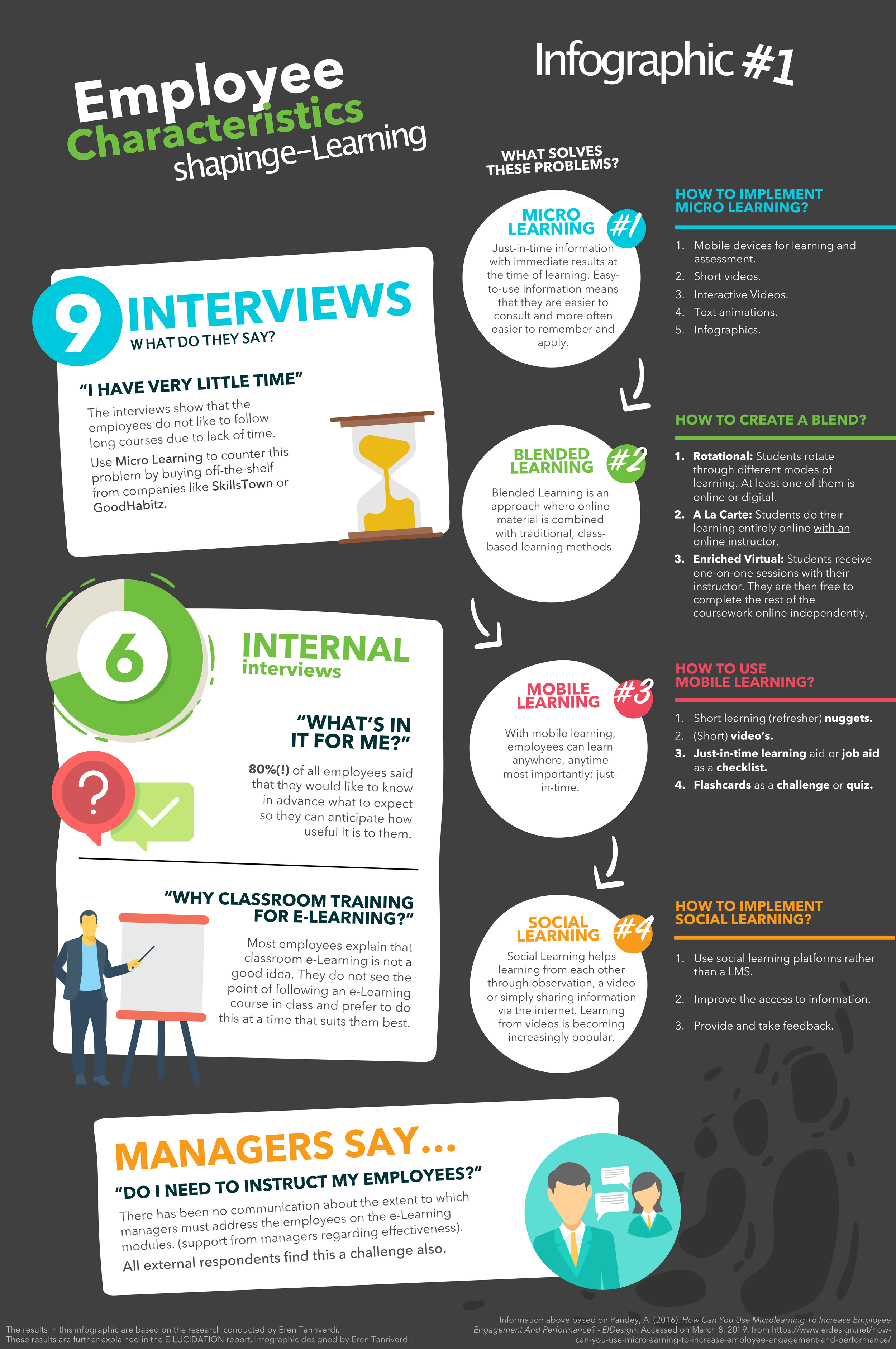
Managers, employees and comparable external organisations were interviewed about usage, support, time investment and success factors. The findings were used to make the approach practical, rather than purely theoretical.
3. Identified suitable learning formats
Based on the research, microlearning, mobile learning, blended learning and social learning were selected as suitable formats. The emphasis was on short, accessible and practical learning solutions.
4. Structured decisions and delivery
The ADDIE model was used to structure design, development, implementation and evaluation logically. A decision tree was also created to support choices between in-house development, outsourcing and buying ready-made content.
5. Delivered advice and guidelines
The recommendations were translated into visual guidelines and an explanation. This gave the organisation a practical framework for future decisions about digital learning, tools and suppliers.
Result.
The organisation gained a concrete starting point for digital learning. The advice guided decisions about audiences, formats, channels and implementation, without immediately getting caught up in individual resources or tools.
Impact:
- Guidelines for using digital learning effectively.
- A scalable approach for a large international audience.
- A practical foundation for the ongoing learning strategy.
- Less risk of fragmented, disconnected learning initiatives.