Context.
Didacs supported an e-commerce platform in renewing an e-learning template for customer service.
The assignment focused on instructional structure, review and coordination. Rather than building modules directly, the aim was to make the template better reflect customer service staff’s day-to-day work and support future learning content.
The brief.
The client wanted a new e-learning template for customer service. The existing setup offered too little guidance for consistent modules and did not always connect well with recognisable customer cases.
The brief was to bring greater consistency to structure, interaction, tone and instructional choices, allowing future modules to be developed faster and more consistently.
Why this was challenging.
Customer service requires practical learning content. Employees need more than information to read: they need to learn how to assess customer questions, make decisions and apply policies in concrete situations.
A template therefore needs to do more than look right. It must also help structure learning objectives, scenarios, feedback and assessment logically.
Approach.
This section shows how Didacs approaches a challenge: first clarify the question, then substantiate decisions and turn them into a workable approach.
1. Analysed the existing setup
Existing modules and templates were reviewed for structure, tone, interaction and relevance to practice. The review considered where the structure helped and where employees were mainly consuming information without actively processing it.
2. Clarified learning objectives
Each section was assessed for what employees needed to know, understand or apply. This clarified which content simply needed explanation and which parts would work better with scenarios, decisions or practice questions.
3. Put customer cases at the centre
The setup was linked more closely to recognisable situations from everyday customer service. This made the template more than a vehicle for information: it became a way for employees to practise the judgements they encounter at work.
4. Used interaction with a purpose
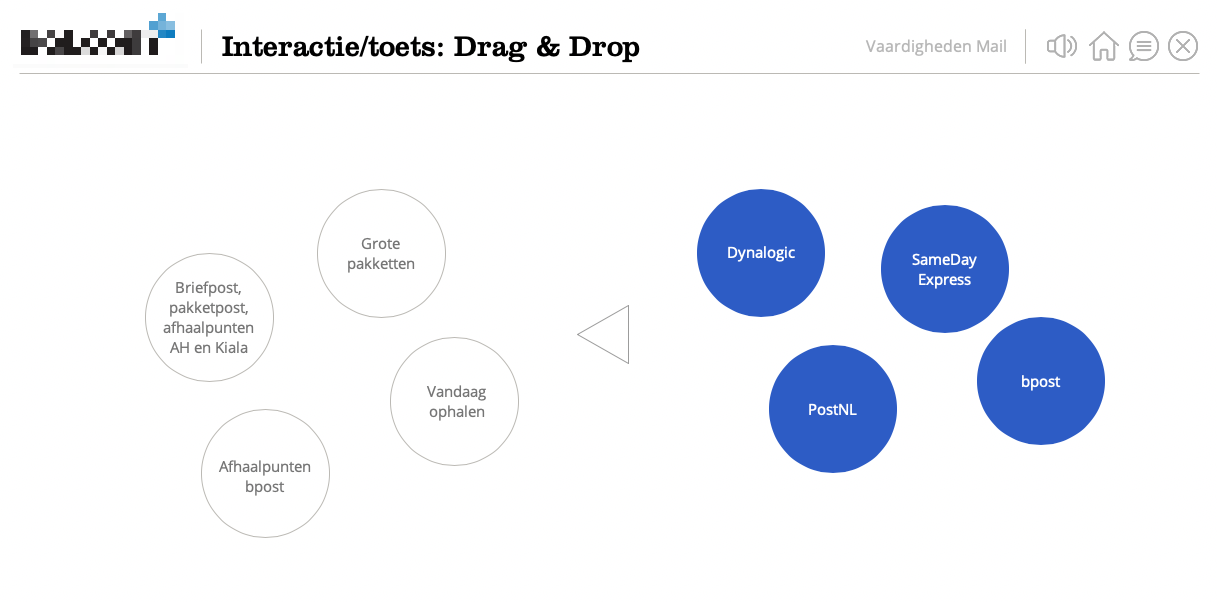
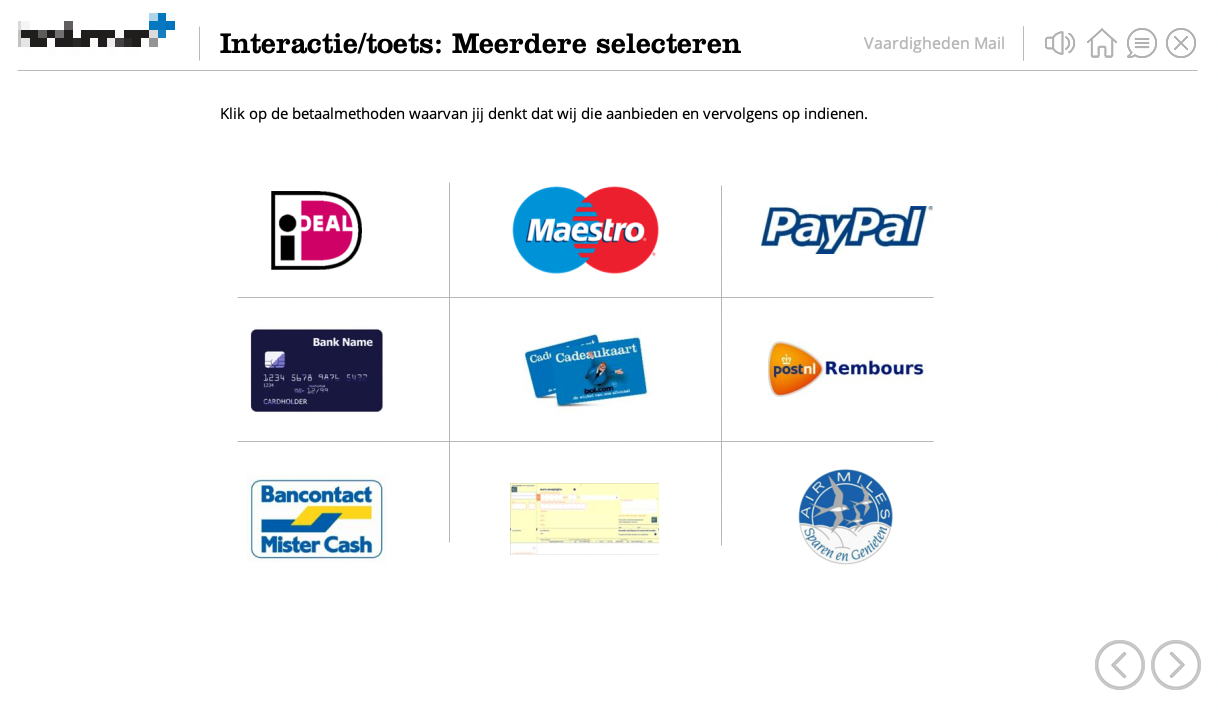
Interaction was used selectively where it added value to the content. Examples included decision-making situations, short checks and feedback moments. Parts without a clear practice benefit were deliberately kept simpler.
5. Refined the template structure
The template was structured around consistent elements for introduction, explanation, practical examples, practice and completion. This created greater consistency between modules without making every module feel the same.
6. Supported review and handover
The project included reviews of instructional quality, user experience and reusability. The approach was designed to give future creators and subject-matter experts clearer guidance on using the template.
Result.
The result was a renewed e-learning template for customer service modules, with more structure, a closer connection to real situations and clearer choices for interaction and feedback. The template provided guidance for new modules and made it easier to build consistent learning content.
Impact:
- Greater consistency in customer service e-learning modules.
- A stronger connection between customer cases and learning objectives.
- Fewer disconnected screens containing only information.
- Clearer use of scenarios, questions and feedback.
- A reusable foundation for future modules.